
Measuring Liquid Nitrogen with Guided Wave Radar: A Cryogenic Case Study
Oct 26, 2026
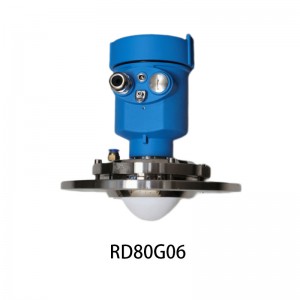
Shenzhen, Guangdong Oct 26, 2026 (Issuewire.com) - One semiconductor fab in East Asia kept its liquid nitrogen (LIN) inventory on a 50 m³ vacuum-insulated storage tank, feeding cryo-pumps and a thermal-shock test line that ran the metal packages down to '196 °C before they ever reached a wafer. The tank was measured by a differential-pressure (DP) cell that the plant's instrument team no longer trusted below half full, and by a magnetostrictive probe that had frozen its float to the wall during a top-off surge. When a scheduled boil-off audit showed a 6% book-versus-physical gap, the engineering office asked us to specify a measurement that would hold through the cold, the vapor and the frost -- and stop the monthly manual dipping through the safety hatch. We put a guided wave radar level transmitter on the tank. This is what the cryogenic duty taught us about probe selection, thermal zero shift and vapor plumes, and why free-space radar was the wrong call on that tank.
Why liquid nitrogen defeats ordinary level meters
Liquid nitrogen sits at 77 K ('196 °C) at atmospheric pressure, and the margin between "liquid" and "gas" is a few tenths of a degree and a few millibar. That narrow window is what breaks conventional instrumentation. A DP cell infers level from the weight of the column, but the column's density changes with temperature and with how much boil-off gas is entrained near the surface, so the inferred level drifts exactly where the process cares most -- at low inventory, when a run-out would starve the cryo-pumps. A magnetostrictive float rides the surface only until a rapid fill or a pressure transient lets it stick to the wall or lose contact in a vapor pocket. Capacitance probes see their impedance swing with the dielectric of the vapor as much as with the liquid.
None of those instruments fails because it is badly made. They fail because they depend on a physical property -- density, buoyancy, permittivity contrast at a moving interface -- that liquid nitrogen keeps changing at the boundary. The measurement we needed had to read the surface directly, ignore the gas density above it, and survive a temperature that turns inhaled moisture into ice on any exposed metal.
The case: a 50 m³ LIN storage tank at a wafer fab
The tank itself was a vacuum-jacketed, vertical, atmospheric-pressure vessel with a 1.2 m diameter and roughly 44 m of liquid height when full. LIN arrived by tanker twice a week and was withdrawn through a submerged pump to a vaporizer and then to the fab's point-of-use. The original instrumentation was a DP cell on a bridle and a magnetostrictive gauge in a stilling well. Both reported to the building management system over 4-20 mA, with a weekly manual tape dip cross-check through the top hatch as the "truth" reference.
The pain points the fab reported were concrete. Below about 40% level the DP reading diverged from the dip by up to 250 mm and wandered with ambient temperature. The magnetostrictive gauge read flat for hours after a fast top-off, then jumped. And every dip meant a technician in cryo PPE opening a hatch on a vessel that, by definition, was trying to boil, which the safety office counted as a controlled-but-undesirable exposure. The goal was a single transmitter that removed the dip, held across the full span, and reported over HART so the loop could be recalibrated without a second scaffold.
Why we chose guided wave radar, not free-space
On a calm, ambient tank the easy answer is a free-space radar level transmitter, and we use that answer often. A cryogenic tank is not a calm ambient tank. Above the liquid, the vapor space is not air -- it is nitrogen gas whose density climbs sharply as you approach the surface and as boil-off raises the local pressure, and whose temperature gradient can be 50 K across the top metre. A free-space microwave beam launched from the flange travels through that gradient and bends; the echo that comes back is smeared, and at low levels the beam can clip the tank wall or the submerged pump column. Free-space radar also struggles at the top of the span, where its own dead zone swallows the very region the fab most wanted to protect.
Guided wave radar (GWR) confines the microwave to a probe -- a rod, a twin-wire pair or a coaxial tube -- so the wave has no beam to bend and no wall to clip. It measures the round-trip time of an electromagnetic pulse along the probe and converts it to distance using the propagation velocity in the surrounding medium. Because the liquid nitrogen and the nitrogen vapor differ in dielectric constant -- about 1.43 for the liquid at 77 K against roughly 1.0001 for the gas -- the surface is a clean, high-contrast reflection regardless of vapor density. Geometry stops mattering. That single property is why GWR is the default we reach for on cryogenic and low-dielectric liquids.
The timing itself is simple arithmetic, and it is worth stating because it is the part customers most often mis-trust. The microwave travels the probe at a velocity set by the surrounding dielectric -- v = c / r, where c is the speed of light and r is the relative permittivity of whatever surrounds the probe. In liquid nitrogen at 77 K, r is about 1.43, so the wave moves at roughly 2.51 -- 10 m/s, slower than in air but stable, because the liquid's dielectric does not wander the way its density does. The transmitter measures the round-trip time "t and reports level as v·"t/2. The gas above contributes a near-unity r of 1.0001, so the step from 1.0001 to 1.43 at the surface is a sharp, repeatable reflection -- which is the whole reason the reading holds when the vapor density does not.
Probe selection for a boiling cryogen
The probe is the part that lives in the cold, and on boiling liquid nitrogen it has to do three things at once: stay straight, stay anchored and stay readable. We considered three geometries. A single rigid rod is simple and reads cleanly, but at 44 m it is long enough to whip in the boil-off turbulence and to sag under its own cold weight. A flexible cable probe reaches the full height cheaply, but an unfettered cable in a tank that is actively boiling will dance, and a dancing probe gives a wandering echo and a worn end seal. A coaxial probe -- a centre conductor inside a grounded outer tube -- trades some span for the best signal confinement and the least sensitivity to turbulence and low dielectric, which is exactly the problem set on this tank.
We specified the coaxial probe from our guided wave radar level transmitter line, anchored at the bottom with a weight so the column could not whip, and sleeved through the vapor space so the only exposed length was the measurement span. The outer tube also shielded the signal from the submerged pump column and from the metallic stilling well left over from the old gauge, both of which would otherwise have been spurious reflectors. For a boiling, low-dielectric, tall tank, coaxial was not the cheapest probe; it was the only one whose echo we could defend at the commissioning table.
The thermal problem: keeping electronics out of the cold
The microwave electronics cannot live at '196 °C. They sit in a transmitter head mounted on the flange, but on a cryogenic tank the flange itself is cold, and the process connection conducts cold upward into anything bolted to it. The fix is an extension neck -- a length of standoff that lifts the electronics above the frost line so the head stays at ambient and the probe enters the cold through a welded, hermetic process seal. On this tank we used a 600 mm extension and a heated enclosure around the head, because the fab's humidity meant any metal near the cold face frosted within an hour of a top-off.
The hermetic seal matters more than it sounds. A porous or breathing seal lets moisture into the probe annulus, where it freezes, adds a dielectric load and slowly shifts the baseline. We spec a welded seal and a dry purge on ever cryogenic GWR we ship, and we document the purge pressure in the installation sheet rather than leaving it to the installer's judgment. A frozen annulus is a calibration fault only until you warm it -- then it was never a calibration fault at all.
Boil-off, vapor plume and the false-echo question
The most common objection to radar on cryogen is the vapor plume: when LIN boils, a visible cloud of cold gas rises off the surface, and engineers worry the radar will read the cloud instead of the liquid. Free-space radar on an open or poorly sealed tank can indeed see that plume as a false surface, because the beam passes through a region of rapidly changing gas density. GWR does not, and the reason is geometric. The wave never leaves the probe, so it cannot be scattered by a plume standing centimetres away in the vapor space; it only reports the dielectric step where the probe passes from gas to liquid. What the plume does affect is the gas density term in the timing math, but that term is near 1.0001 either way, so the error it introduces is a fraction of a millimetre -- below the resolution anyone would act on.
What boil-off does change is the surface itself. A vigorously boiling tank has a churning, two-phase region at the top where liquid and vapor mix, and the true "liquid level" is the base of that region, not its frothy crown. We set the probe's measurement range to begin below the typical boil-off band and applied a small blanking window at the surface so the echo-processing ignored the froth and locked onto the coherent reflection beneath it. The fab's dip tape, read at a quiet moment, confirmed the base level to within the tape's own tolerance.
Installation: sealing, anchoring and the dead zone
Installation on a cryogenic tank is mostly discipline. The probe went in through the existing top nozzle after the tank was warmed and purged, with the bottom weight set on the tank floor so the coaxial column hung true. We flagged the sealing on the hazardous-area drawing because the tanker line and the vaporizer made the head a potential ignition point, and the fab's electricians sealed to the zone class before the first cold soak. The one mistake we caught in review was a zero reference taken at ambient: a 44 m steel probe shrinks as it cools, and measuring the empty tank warm then filling it cold would have baked a length error into every reading.
The dead zone -- the region at the top of the probe the transmitter cannot measure -- had to be respected on both ends. At the top, the transmitter needs a fixed reference point that does not move with thermal contraction, so we referenced zero to the cold, settled probe, not to the warm install. At the bottom, the weight and the end seal occupy a region the transmitter treats as always-liquid, which is fine because the pump suction sits above it and the fab never runs the tank that low. We documented both limits on the loop drawing so a future operator would not treat the bottom 300 mm as readable inventory.
Commissioning and the first cold soak
Commissioning a cryogenic GWR is two events, not one. The first is the warm functional test: apply power, confirm the head talks HART, send a known level with the probe in air, and verify the echo curve shows a single clean reflection at the expected distance. The second is the cold soak, which happens only after the first tanker fills the tank and the metal comes to temperature. We re-zeroed against the dip tape at the cold, settled condition and confirmed the reading held as the tank was drawn down through a full pump cycle.
The cold soak exposed the one real surprise: a slow, repeating sawtooth of about ±2 mm that tracked the boil-off rate. It was not noise in the transmitter; it was the liquid surface itself breathing as the vaporizer drew unevenly. Once we understood it as a process signature rather than an instrument fault, we filtered it in the BMS at a time constant the process engineer chose, and the reported level steadied to ±1 mm repeatability against the dip. The lesson is that on a boiling cryogen, some of what looks like measurement error is the liquid telling you how hard it is boiling.
Results after eighteen months
Eighteen months in, the fab retired the weekly dip. The guided wave radar level transmitter now carries the full span from near-empty to full, reporting over 4-20 mA with HART and feeding the inventory reconciliation that the boil-off audit had exposed as broken. The book-versus-physical gap that had been 6% closed to within the tank's own metering uncertainty. The DP cell stays as a redundant low-level alarm only, and the magnetostrictive gauge was removed.
The safety office's count of controlled exposures dropped by the twelve hatches a year the dip had required. The maintenance record shows two planned inspections of the heated enclosure and one purge-line filter change, and no transmitter returns. The fab's instrument engineer now specifies coaxial GWR as the default for any cryogenic or low-dielectric liquid in the yard, and reserves free-space radar for the ambient, high-dielectric duties where its beam is an advantage rather than a liability.
The dip it replaced took a two-person crew roughly forty minutes per week -- suit-up, hatch opening, tape reading, re-seal and the log entry -- or about thirty-five technician-hours a year spent next to a vessel that was actively trying to boil. Removing it was the safety office's stated priority and the inventory accuracy was the engineering office's; the GWR delivered both from one transmitter, and the labor it freed went back into the calibration programme the fab had been deferring. On a tank that small, that reclaimed time was a larger line item than the instrument itself.
What We Would Specify Differently
If repeating the project, we would install the heated enclosure from day one to prevent condensation and avoid unnecessary service visits. We would also emphasize the zero-reference procedure in the commissioning pack to prevent errors between ambient and cold lengths.
Guided wave radar (GWR) with a coaxial probe remains the best choice for boiling liquid nitrogen (LIN). Cable probes can whip during boil-off, while free-space radar beams may bend through vapor gradients. The probe's additional cost is minimal compared with potential inventory losses.
Specifying Your Own Cryogenic GWR: A Short Checklist
For liquid nitrogen, oxygen, argon, or LNG, confirm liquid and gas dielectric constants. Select probe geometry based on span and turbulence: coaxial for tall or boiling tanks, rod for calm conditions, and anchored cable where suitable. Protect electronics from frost, purge moisture, calibrate at cold conditions, define dead zones, and contain radar waves.
Our broader level transmitter range covers the non-cryogenic duties this fab still runs -- water, solvents, oils -- with the same HART and 4-20 mA backbone, so the instrument team works one commissioning language across the yard. Where the liquid is LIN, LOX, LAR or LNG, the cryogenic GWR is the part we reach for, and the case above is the one we cite.
When a different meter is the honest answer
Guided wave radar is not the answer to every cryogenic level question. On a small Dewar or a mobile tank where a probe cannot be installed, a weighing scale or a capacitive point switch may be the pragmatic choice. On a large, well-sealed, ambient-pressure LNG tank with a clean vapor space, free-space radar at 80 GHz can read the surface from the roof with a tight beam and no probe to frost. And where the application needs a flow total as much as a level -- a LIN fill line, say -- a liquid nitrogen flow meter on the transfer line answers a different question than the tank gauge does. The right instrument is the one specified against the liquid, the span and the vapor, not the one in the catalogue.
We have written separately about liquid nitrogen measurement at wafer-fabrication plants with guided wave radar, which covers the fab-duty context in more detail for readers specifying a similar installation. The present case is the field result of that reasoning on one real tank.
Conclusion
Liquid nitrogen breaks level meters that infer, because inference depends on a density and a surface that the cryogen keeps moving. A guided wave radar level transmitter reads the surface directly, ignores the vapor density above it, and confines its wave to a probe that the boil-off cannot bend. On the fab's 50 m³ tank it closed a 6% inventory gap, removed a weekly safety exposure, and held ±1 mm repeatability through eighteen months of boiling, drawing and top-off. The technology choice was coaxial GWR; the discipline that made it work was the cold zero-reference, the sealed heated head, and the honest dead-zone limits. If your tank holds LIN, LOX, LAR or LNG and your current meter wanders at low level, that is the combination we would put on it.
If you are specifying a cryogenic level instrument and want the probe geometry, the extension length and the purge pressure matched to your tank rather than to a generic table, our application engineers will work from your tank drawing and your boil-off rate. Reach the team through the contact page with the vessel size, the liquid and the current measurement headache, and we will return a specification sheet rather than a brochure.
Source :SHENZHEN LONNMETER GROUP
This article was originally published by IssueWire. Read the original article here.
More News

Healey to shield low-income pensioners from income tax in the Budget
Changes are needed to prevent the full, flat-rate state pension becoming liable for income tax after it rises in April.

Why Some People Are Paying to Make Friends
Apps that match personalities — for a price — have surged in popularity amid a loneliness epidemic.

What is the Budget and what could be in it?
Chancellor John Healey will set out his plans for UK taxes on 28 October.

Healey's Budget needs to sustain the stronger economy through gathering clouds
The economic is positive now but come January things could become trickier for the Labour government

Big, noisy and coming to a town near you - why the data centre backlash is growing
Data centres are the lifeblood of our digital world, but there are growing concerns about their environmental impact. The BBC explores their rise in charts.

Attention, Passengers: High Airfares May Be Here to Stay
Ticket prices jumped after fuel costs spiked because of the war with Iran, but airlines say even an end to the conflict will not bring fares back down quickly.

A Fight Over Felon Voting Prompts a Free Speech Debate
A Minnesota group worried that its opposition could expose it to prosecution under the state’s deceptive-practices law. Its lawsuit could have wide implications for limiting speech around elections.

Noah Adams, Longtime Host of ‘All Things Considered,’ Has Died at 84
A postman’s son from Kentucky, he worked hard to lose his accent but never forgot his Appalachian roots. “The best stories come from west of the Potomac,” he said.


How to Straddle the MAGA Divide
Beth Wilkinson is a Washington lawyer who has thrived representing the Trump administration’s enemies and allies alike. Does she represent a vanishing type?

Audi to Build Factory in Georgia, Trump Says
The Volkswagen division, which imports all its cars from Europe or Mexico, has been hit hard by U.S. tariffs.

Former ‘60 Minutes’ Boss to Join Video Journalism Start-Up
Bill Owens, who left the show after clashing with CBS executives, is joining Newpress, which publishes work from creators on YouTube.
YOUR NEWS, OUR NETWORK.
Do you have Great News you want to tell the world?
Be it updates about your business or your community, you can make sure that it’s heard by submitting your story to our network reaching hundreds of news sites across 6 verticals.