
Manufacturer vs Distributor: Which Gym Equipment Supply Model Fits Commercial Enterprises?
Sep 16, 2026
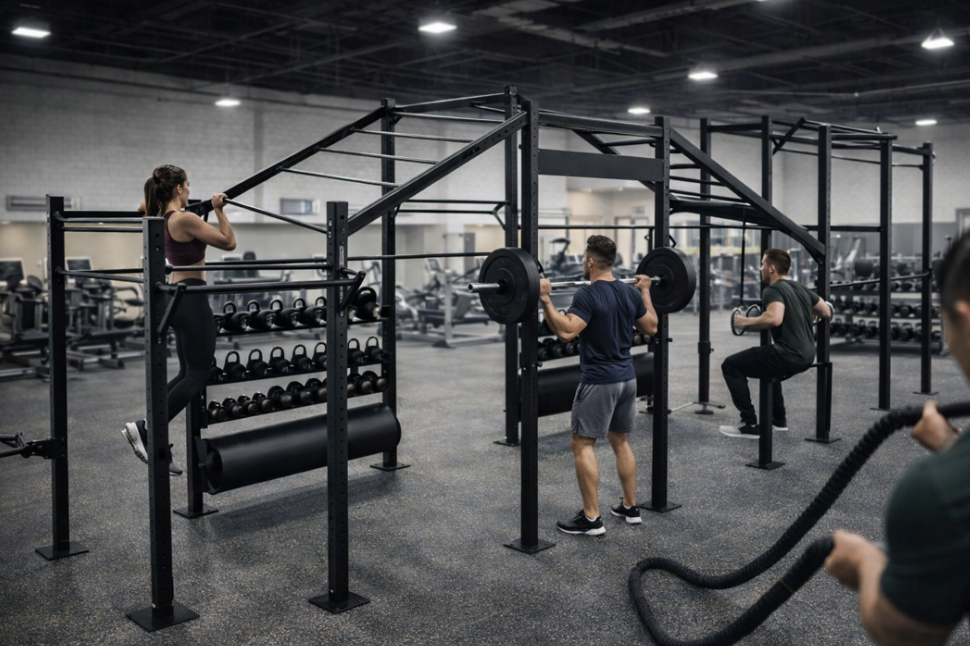
Nantong, Jiangsu Sep 15, 2026 (Issuewire.com) - Here is a question many procurement managers ask before signing a purchase order: is it smarter to buy directly from the factory, or to source through a distributor sitting closer to home? The answer shapes budgets, delivery schedules, and even how a new fitness floor looks on opening day. Commercial buyers rarely order a single machine; they plan a full room, and the sourcing route affects every piece in it. Choosing the right gym equipment supply model matters because the sticker price rarely tells the whole story.
On one side sits the manufacturer, the party that builds racks, machines, and free-weight lines from raw steel. On the other sits the distributor, the party that keeps stock on hand and covers the last mile to the gym door. Each carries its own strengths, costs, and timelines. Understanding how these two roles divide the work makes it far easier to plan a purchase that fits real operating conditions.
Mapping the Supply Chain: Two Roles on One Line
The simplest way to think about it: the factory makes the product, and the distributor handles inventory and final delivery. Both sit on the same supply chain, yet they solve different problems.
A manufacturer such as Senfeng (Nantong Senfeng Sports Products Co., Ltd.) works at the production end, turning drawings and specifications into finished commercial gym equipment. A distributor, by contrast, buys in advance, stores goods locally, and ships smaller quantities on short notice.
Buyers frequently confuse two numbers here. The first is the ex-works price, meaning the cost of goods as they leave the factory. The second is the landed cost, meaning everything added on the way to the gym: ocean freight, customs clearance, local warehousing, and inland transport. A low factory quote can still turn into a higher final figure once these steps stack up, so it pays to compare total cost rather than unit price alone.
Counting the Hidden Numbers, Not Just the Unit Price
Factory-direct buying usually offers a lower base price, plus the freedom to customize color, logo, and dimensions. The trade-off is responsibility: the buyer takes on freight, clearance, and storage. Distributor buying carries a higher unit price and a fixed catalog of SKUs, but it rewards the buyer with ready stock, quick handover, and easy returns.
Consider a single Smith Machine as an example. Ordered factory-direct, the timeline runs through production, quality inspection, packing, ocean shipping, port clearance, and inland delivery before the machine reaches the training floor. That path ties up capital for weeks and asks the buyer to manage several handoffs. Ordered from a local distributor, the same machine can move from a nearby warehouse to the gym in days, though at a higher price and with less room to adjust the specification.
Neither route is simply better. The right choice depends on how much cash a company can commit up front and how long it can wait.
Matching the Route to the Situation
A few clear patterns help guide the decision.
- New Full Fit-Outs: A newly opening chain or corporate gym that needs a full fit-out often benefits from the factory-direct route. Ordering everything at once keeps the visual identity consistent across every rack and bench, and it locks in a matched source for future spare parts.
- Restocking and Repairs: A facility that already runs equipment and only needs restocking or urgent repair parts often leans toward a distributor. When a cable snaps or a seat pad wears out, waiting for a full production cycle is not realistic.
- A Mixed Approach: A middle path works well for many operators. Main machines come factory-direct for cost and customization, while wear parts such as handles, cables, and seat pads come through a distributor for speed.
Framing the question this way keeps attention on operational needs rather than on price tags alone.
Why Senfeng Fits the Factory-Direct Route
For companies leaning toward direct sourcing, a capable gym equipment supplier removes much of the friction. Nantong Senfeng Sports operates its own production line across a facility of around 12,000 square meters, which supports both large single orders and mid-sized commercial projects. This scale matters because it shows factory-direct sourcing is not reserved only for full-container buyers.
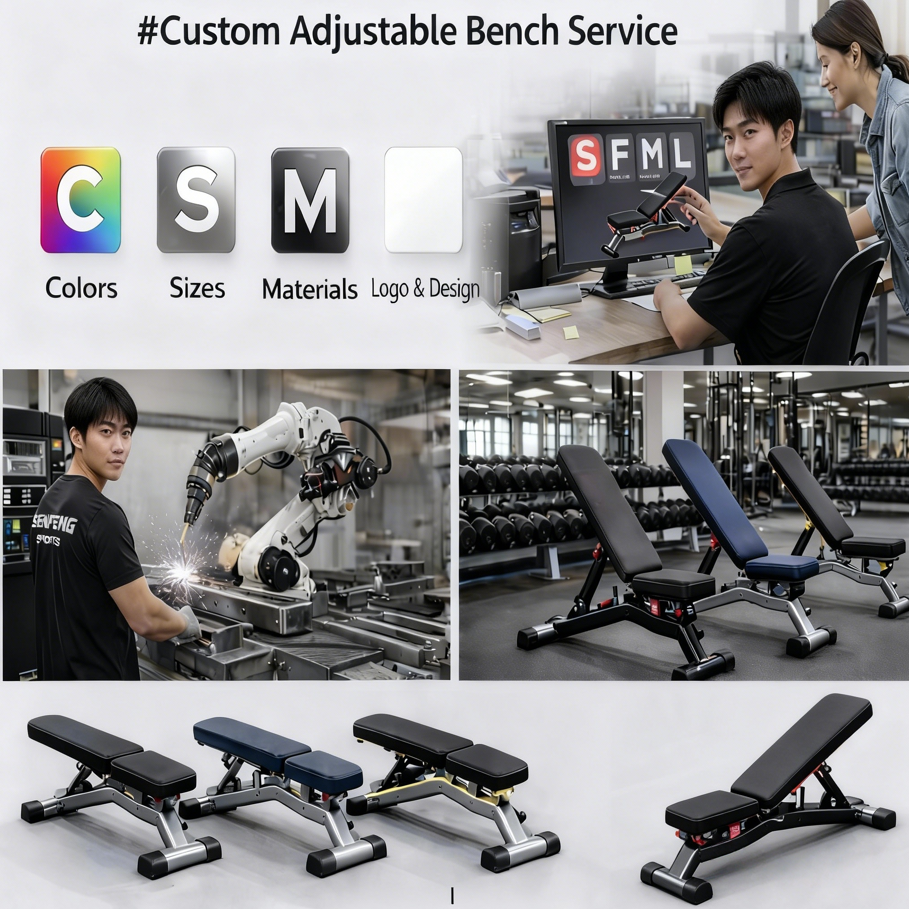
Flexible order handling adds further value. As a self-producing and self-selling factory, Senfeng accepts a low minimum order quantity and supports both wholesale and retail partnerships. A team can request samples or submit drawings for review, and product color and size can be adjusted to match a project's requirements. This means a mid-sized order can still receive genuine customization rather than a fixed, take-it-or-leave-it catalog.
Packaging plays a quieter but real part too. Knock-down (KD) packing reduces the shipping volume of bulky machines, which helps control ocean freight cost per unit. Combined with more than eight years of production experience, quality inspections carried out before shipment, and available OEM and ODM support, these details make the factory route practical for buyers who want customization without giving up dependable output.
Response time rounds out the picture. Senfeng offers 24-hour service with quick replies, so drawings, samples, and specification questions move forward without long gaps. For a mid-sized commercial project, that steady communication often matters as much as the price itself when planning a rollout.
Choosing With Clear Eyes
Factory-direct and distributor models each carry genuine strengths. The manufacturer route rewards buyers who value lower base cost, deep customization, and a single matched source across a full set of gym equipment. The distributor route rewards buyers who value speed, small quantities, and simple returns.
The deciding factors come down to a company's own warehouse capacity, its restocking rhythm, and how much delivery lead time it can absorb. A business with storage room and a planned opening date has different needs from one patching a busy floor mid-season. Weighing these against the gym equipment supply model on offer, rather than reacting to unit price alone, leads to steadier purchasing decisions.
Enterprises weighing their next order are welcome to send an inquiry or explore the product range and factory details in more depth. More information is available at https://senfengfitness.com/
Media Contact
Nantong Senfeng Sports Products Co., Ltd
+86 19514497849
Source :Nantong Senfeng Sports Products Co., Ltd
This article was originally published by IssueWire. Read the original article here.
More News
Spanish firm set to buy Harland and Wolff
Spain’s state-owned shipbuilder Navantia is in exclusive talks to buy the Belfast-based shipyard.
Cyber wars and global collaboration: Huawei executive on cybersecurity
"Cybersecurity is no longer a weapon of mass disruption but of mass destruction, because it can kill lives," said Aloysius Cheang, Huawei's president of Cybersecurity & Privacy Protection and chief security officer for the Middle East and Central Asia, stressing the increasingly dangerous nature of cyberattacks.

China's economy shows stable overall performance
China's economy has continued to improve and made steady progress in high-quality development, amidst a complex and ever-evolving international landscape.
China's yuan loans grow by 16.02 trillion yuan in first 3 quarters
China's yuan-denominated loans rose by 16.02 trillion yuan (about $2.27 trillion) in the first three quarters of the year. The M2, a broad measure of money supply that covers cash in circulation and all deposits, climbed 6.8 percent year on year to 309.48 trillion yuan at the end of September.
China to enhance catalytic role of government investment
On September 26, the Political Bureau of the Central Committee of the Communist Party of China convened a meeting to analyze the current economic situation and outline the next steps for economic work. This meeting not only signaled a shift in China's macroeconomic policy but also showed the country's confidence in achieving its annual economic and social development goals, rallying the entire society to drive sustained economic recovery and improvement.
Ensuring rule-based high-quality development of the private sector
A draft law on China's private sector promotion was released to solicit public opinions last week, marking a significant milestone in the construction of a law-based business environment in China.

How Kamala Harris’s Economic Plan Has Been Shaped by Business Leaders
The vice president has repeatedly incorporated suggestions from business executives into her economic agenda.

China’s Stock Markets Rebound on Promises to Help Businesses
Assurances from government officials on plans to strengthen the private sector offset a lack of specifics about economic stimulus.
China reports 5.3% growth in foreign trade over first three quarters
China's foreign trade surged robustly in the first three quarters of 2024, surpassing the 32 trillion yuan ($4.44 trillion) mark for the first time during this period.

‘I lost £165k to fraud in an hour’ - customers say they were let down by Revolut
Revolut was named in more complaints about fraud last year than any of the UK’s biggest banks or e-money services.
TSMC 3rd-quarter profit to jump by 40% amid rising chip demand
TSMC 3rd-quarter profit to jump by 40% amid rising chip demand

John F. Kennedy Jr.’s 1990s-Era Magazine Is Back, With a QAnon Twist
It is a reanimation story strange enough for a zombie movie, made possible by the fact that the original George trademark lapsed, only to be secured by a conservative lawyer.

Evan Gershkovich, U.S. Journalist Imprisoned in Russia, Will Publish a Memoir
The memoir, which will cover his time in prison and Russia’s move toward autocracy, will be published by Crown, an imprint of Penguin Random House.

Dreaming of diamonds: Generations dig for fortune in India's gem town
In Panna, families hunt for diamonds hoping to strike rich and escape the cycle of poverty.

Thousands of cars that crash in US are ending up in Russia
The South Caucasus nation of Georgia has a huge used car market, with many vehicles finding their way over the border.

The Secretive Dynasty That Controls the Boar’s Head Brand
The deli-meat company made its owners fabulously wealthy. But they have remained silent, even as the company faces the biggest scandal in its history.

Watch: Why is the latest SpaceX rocket test a big deal?
The BBC's Pallab Ghosh explores why this world first test is a big deal for space exploration.

Fisher-Price Recalls ‘Snuga Swings’ Linked to Five Infant Deaths
The U.S. Consumer Product Safety Commission announced the recall, which one of its commissioners said was “doomed to fail.”

How Roger Goodell Made the NFL the World’s Wealthiest Sports League
Under the expansionist leadership of its commissioner, the National Football League is growing richer and richer. So, too, is Mr. Goodell.

Pakistan hosting SCO meeting is a turning point for regional diplomacy
Pakistan hosting SCO meeting is a turning point for regional diplomacy

Executives and Research Disagree About Hybrid Work. Why?
Companies like Amazon have required a return to the office five days a week despite findings showing benefits to employers that allow some remote days.

Mortgage costs 'unlikely' to return to low levels
The boss of the UK's biggest lender says mortgage costs are unlikely to fall to levels seen in the past decade.
Budget rule change could mean more money to build hospitals
Here is how the chancellor could choose to tweak the government's borrowing rules to free up more cash.

Port plan to go ahead after row over minister's comments
A £1bn investment will take place, despite a row with the owner of P&O Ferries, says the business secretary.

Why Millennials Prioritize Spending Money to Improve Their Lives
Placing a high value on personal growth, millennials and Gen Z appear more likely than older generations to make hobbies and nonessential purchases a spending priority.

Work Advice: How Can I Get My Male Boss to Notice Me?
When there are men in the room, a female colleague is made to feel invisible.

Filmed in New York, Hold the Taxis and Radiators
When independent movies like “Rosemead” travel to a state for tax incentives, they save money but add creative challenges.

China's consumer prices rose moderately in September
China's consumer prices rose moderately in September. Experts say that market demand is set to rise following the introduction of powerful new policies aimed at stimulating the economy.

California Rejects Bid for More Frequent SpaceX Launches
A commission denied a request to increase the number of rocket launches on the state’s central coast, citing environmental concerns.

Fitch Ratings Issues Warning About France’s Finances
A rating agency’s warning about the country’s ballooning debt comes as the prime minister tries to push an austerity budget through a divided Parliament.

Led by Believers in the City’s Future, Detroit Is on the Rebound
Once the largest city in the U.S. to declare bankruptcy, this Midwestern metropolis is now thriving. But some obstacles still remain.

China stimulus policy blueprint shows passion, patience & perseverance
China's economic policy shift can be viewed through three keywords: passion, patience and perseverance.

P&O owner to attend summit despite row over minister's comments
It had been feared they might pull out after Transport Secretary Louise Haigh criticised the ferry firm and urged consumers to boycott the company.
YOUR NEWS, OUR NETWORK.
Do you have Great News you want to tell the world?
Be it updates about your business or your community, you can make sure that it’s heard by submitting your story to our network reaching hundreds of news sites across 6 verticals.