
Active vs Passive Battery Balancer: Heltec Energy Technical Analysis on Efficiency and Longevity
Nov 2, 2026
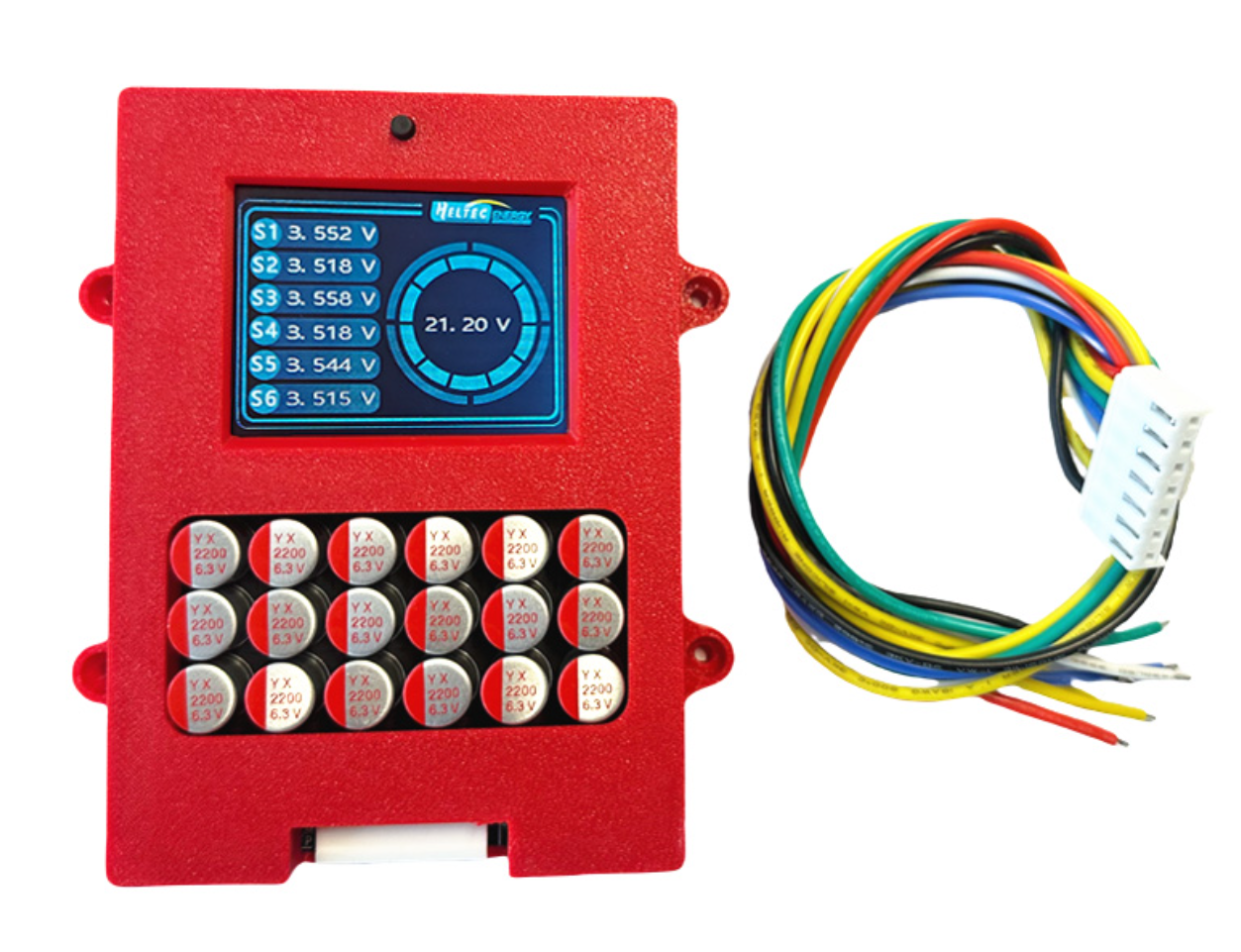
Chengdu, Sichuan Nov 1, 2026 (Issuewire.com) - The performance and longevity of multi-cell lithium-ion and lead-acid battery packs depend heavily on cell uniformity. Due to manufacturing variances, chemical degradation, and localized thermal gradients, individual cells within a series-connected pack inevitably develop differences in voltage, internal resistance, and capacity over time. This variance creates a "barrel effect," where the overall usable capacity of the entire pack is limited by the weakest cell. During charging, the highest-voltage cell triggers overcharge protection early, leaving other cells undercharged. During discharging, the weakest cell reaches its low-voltage cutoff first, cutting off the entire system while usable energy remains trapped in healthier cells. This chronic imbalance accelerates capacity fading and shortens the operational lifespan of the battery pack.
To mitigate these operational imbalances, cell balancing technology serves as an essential internal component of modern battery systems, directly elevating the performance of the entire pack. Historically, passive balancing has been the industry default due to its simplicity. Passive balancers function by discharging higher-voltage cells through resistive shunts, dissipating excess energy as heat. This process only activates near the end of the charging cycle when cell voltage differentials exceed a specific threshold. Consequently, passive balancing results in permanent energy loss and noticeable thermal generation, while failing to transfer charge where it is needed. Because it merely burns off peak voltage and cannot actively restore energy to weaker cells, passive balancing offers limited support in extending the long-term cyclic life of heavily used battery packs. Active vs passive battery balancer: which is better? To answer this question, this technical analysis examines the structural and operational mechanics of both methodologies, utilizing advanced balancing solutions developed by Chengdu Heltec Energy Technology Co., Ltd. to evaluate their long-term impact on efficiency and longevity.
Mechanics and Performance of Active Balancing Technology
Active balancing shifts away from resistive dissipation, utilizing capacitive or inductive energy transfer to dynamically redistribute charge across the pack. This process offers several distinct technical advantages:
- Dynamic Energy Redistribution:Active balancers transfer energy directly from higher-voltage cells to lower-voltage cells. Unlike passive systems that only trigger at the end of a charge cycle, this process operates continuously, initiating as long as a voltage differential is detected during both charging and discharging.
- High-Efficiency Balancing:Heltec Active Balancer modules provide a maximum balancing current of up to 5A, significantly outperforming standard passive circuits. By achieving a minimal balancing threshold of approximately 0.01V with ±5mV precision, these systems eliminate the energy waste associated with heat dissipation.
- Enhanced Operational Capacity:By resolving the single-cell bottlenecks, active balancing mitigates localized cell strain. According to technical assessments by Heltec Energy, this continuous optimization preserves the total energy within the pack, allowing for higher usable capacity during the discharge cycle.
- Robust Protection and Connectivity:These modules feature built-in over-temperature, over-discharge, and low-voltage sleep modes. The hardware is reinforced with conformal coatings to protect against environmental degradation. For advanced management, specific models like the HT-CJ32S25A integrate LCD displays for real-time visualization, alongside Wi-Fi and Bluetooth connectivity for remote diagnostics. The current product lineup includes 8S to 32S balancing boards and specialized maintenance analyzers.
System Integration and Performance Enhancement Value
A balancing module serves as a core accessory integrated directly within the broader battery ecosystem. When permanently installed alongside a Battery Management System (BMS), the active balancer continuously drives individual cell voltages toward uniformity. Minimizing structural variances between cells reduces the premature capacity degradation that typically occurs under high-duty cycles. Field data indicates that integrating an active balancer can recover between 10% and 20% of a battery pack's usable capacity that would otherwise be locked out by single-cell voltage dropouts.
To maximize battery health throughout its operational lifecycle, this active balancing hardware functions alongside diagnostic tools. When paired with high-precision battery capacity testers and internal resistance meters from Chengdu Heltec Energy Technology Co., Ltd., operators can establish a comprehensive maintenance and diagnostic loop. Testing instruments identify degraded cells showing high internal resistance, while the active balancing hardware works to stabilize the remaining cell string, enhancing the structural stability and extending the operational lifespan of the entire battery network.
Primary Application Scenarios
The demand for high-current active balancing is expanding across several demanding industrial and commercial sectors. In recreational vehicle (RV) energy storage systems and residential solar storage banks, active balancing ensures that large, multi-parallel battery banks maintain uniform state-of-charge levels during rapid solar charging and high-current inverter discharging. In the electric mobility sector--including electric two-wheelers, delivery fleets, and unmanned aerial vehicles (UAVs)--active balancing preserves range consistency and stabilizes power delivery under sudden acceleration loads. Industrial power supplies, uninterruptible power supplies (UPS), and telecom backup systems also rely heavily on active balancing to maintain system readiness and prevent sudden cell failures during critical grid outages. In each scenario, the integration of matching capacity testers and resistance meters provides operators with a full-scale preventative maintenance infrastructure.
R&D Infrastructure and Manufacturing Standards
The reliability of active balancing electronics depends heavily on the precision of their manufacturing and the rigor of their engineering validation. Heltec Energy maintains an integrated production and engineering footprint centered at its dedicated manufacturing facility in Chengdu. The factory operates automated Yamaha SMT assembly lines capable of a daily production output between 800 and 1,000 units, ensuring high manufacturing consistency and scalable supply chains.
The engineering division consists of more than 30 specialized research and development engineers focusing on power electronics, firmware design, and electrochemical diagnostics. This technical framework allows the company to secure international compliance certifications, including CE, FCC, and WEEE standards. To support global distribution and minimize lead times for international manufacturers and system integrators, overseas warehouses are maintained across major regions, including North America, Europe, Russia, and Brazil. Comprehensive FAQ frameworks support flexible OEM and ODM service agreements, enabling global clients to acquire custom-tailored balancing configurations optimized for specific industrial applications.
Conclusion
Active balancing technology provides a distinct advantage over passive dissipation by improving energy efficiency and preserving cell longevity. As a core accessory within modern multi-cell configurations, active balancers mitigate the capacity-limiting effects of cell non-uniformity while preserving total pack energy. Selecting an appropriate active balancing module aligned with specific pack architectures helps optimize long-term operational performance.
For detailed technical specifications, product catalogs, or procurement inquiries regarding advanced balancing systems, please visit the official website at https://www.heltec-energy.com/
Media Contact
Chengdu Heltec Energy Technology Co., Ltd
+86 18583756538
No. 16, Chenghong Road, ChenghuaDistrict, Chengdu, Sichuan, China
Source :Chengdu Heltec Energy Technology Co., Ltd
This article was originally published by IssueWire. Read the original article here.
More News

How Chinese private enterprises thrive in high-quality development
How Chinese private enterprises thrive in high-quality development

Shops looted as German cost-of-living protests turn violent
The protests in cities across Germany - including Berlin, Hamburg and Frankfurt - came on the same day hundreds of thousands also protested in France.
China's draft financial law takes aim at cross-border risks
China's draft financial law takes aim at cross-border risks

ACLU’s Anthony Romero Says CEOs Are ‘Ducking the Hard Issues’
Anthony Romero has led the American Civil Liberties Union since 2001. He worries that Americans have fewer rights now.

Cyril Hilsum, Who Helped Invent Flat-Panel Displays in TVs and iPhones, Has Died at 101
The man who helped develop the technology for liquid crystal displays — the screens in flat-panel televisions and laptops — has died at 101.
US firms lead business sign-ups for APEC CEO Summit in Shenzhen
US firms lead business sign-ups for APEC CEO Summit in Shenzhen

China's top 1,000 private companies: Innovation at a glance
China's top 1,000 private companies are boosting innovation, with R&D spending reaching 1.59 trillion yuan ($239 billion) in 2025, up 10.72% year on year. Their growing investment in research and global expansion is strengthening the country's innovation drive.

Japan nears 2% inflation target, but households struggle
Despite progress toward its long-sought inflation target, Japan continues to grapple with weak purchasing power, rising living costs and structural economic challenges.

US tech stocks hit by earnings shock: Alphabet slides 13%
US technology shares suffered their worst selloff in months last week as a wave of quarterly results disappointed investors worried about whether massive artificial intelligence spending will ever pay off.

Energy bills help 'doesn't go far enough'
Families in the West Midlands say they are worried about paying winter energy bills.

Diwali hampers to bring hope to families in need
The Diwali Basket Brigade volunteers want to help vulnerable households with rising food prices.

'New vitality': Upgraded China-Peru free trade agreement takes effect
A protocol upgrading the free trade agreement (FTA) between China and Peru officially entered into force on Sunday, injecting new vitality into bilateral economic and trade relations.
YOUR NEWS, OUR NETWORK.
Do you have Great News you want to tell the world?
Be it updates about your business or your community, you can make sure that it’s heard by submitting your story to our network reaching hundreds of news sites across 6 verticals.