Stock Markets

image

Hong Kong must widen surgical robotics access: FS

Nov 9, 2026

Financial Secretary Paul Chan has urged the surgical robotics industry to move beyond proving technical precision and focus on widening access to care, as Hong Kong seeks to become a global hub for medical-device innovation. Speaking at the inaugural Surgical Futures Forum organised by Hong Kong-based surgical robotics company Cornerstone Robotics, Chan said the field had spent 25 years proving its technical capability. The next task, he said, was to broaden access so more surgeons could use robotic systems and more patients could benefit. "Design and cost remain major barriers. Today's mainstream systems are built for the best-resourced hospitals. Their price, their footprint and their training requirements limit where they can be installed and how widely they can be used," he said. "That helps explain why global penetration remains below five percent. If we believe innovation should serve humanity, progress in surgical robotics must mean more than better technology — it must mean reaching more patients because behind these barriers are countless people still waiting to benefit." Chan said the clearest sign of momentum came in September, when global medtech company Medtronic announced a strategic investment of about US$700 million in Cornerstone Robotics and secured distribution rights for Cornerstone’s surgical system in selected international markets. He described the commitment from a global medical-technology leader as a powerful endorsement of Hong Kong’s innovation sector. "This partnership shows that technology developed here can earn the confidence of industry leaders and, through collaboration, reach international markets," he said, calling it a milestone for both companies and another example of Hong Kong innovation going global. The finance chief also cited a Hong Kong-developed robotic platform now installed at a leading surgical training centre in Strasbourg, France, as evidence that the city’s medtech sector is ready to train surgeons from around the world. Beyond individual companies, he pitched Hong Kong as an end-to-end support system for medical-device innovation, spanning long-term patient capital, biotech fundraising, regulation, clinical data and cross-boundary trials. Edited by Tony Sabine

image

Chinese inflation spikes at plants and cools in shops

Nov 9, 2026

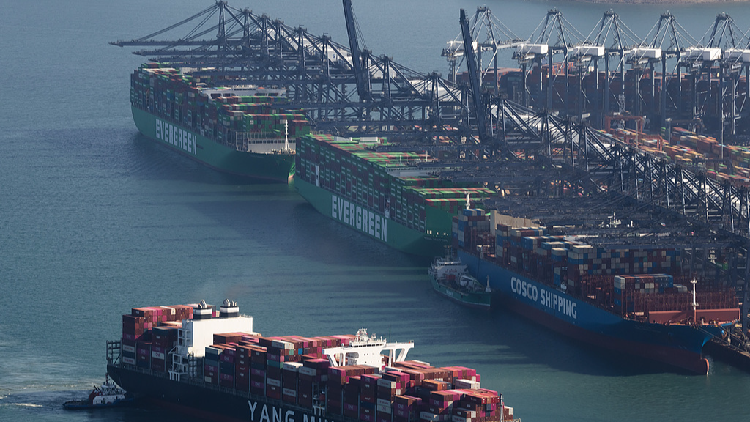
China's producer inflation accelerated to its fastest pace in nearly four-and-a-half years while consumer inflation cooled in October, data showed on Monday, reflecting persistent cost pressures from higher oil prices despite weak domestic demand. Global oil prices remained elevated during much of last month, raising costs for coal mining, oil and natural gas extraction processing, chemicals and other energy-intensive sectors, a key driver of producer-price inflation. Those upstream price pressures have yet to fully feed through to consumers amid soft demand conditions. The producer price index climbed by 5.7 percent from a year earlier, compared with a five percent increase in September, beating economists' forecasts for a 5.3 percent gain in a poll, data from the National Bureau of Statistics showed. The consumer price index rose by 0.7 percent year on year, after a 0.9 percent rise in September, to come in just below economists' expectations for a 0.8 percent increase. On a monthly basis, the CPI matched forecasts for an unchanged outcome after edging up 0.2 percent in September. While the world's second-largest economy grew faster than expected in the third quarter, buoyed by resilient exports, weak household demand has continued to constrain consumer spending. Ongoing trade tensions and an increasingly uncertain global outlook are also clouding the outlook for exports. External shocks are having a greater impact, while the imbalance between robust supply and weak domestic demand remains pronounced, said an official at China's state planner last month. China's struggling stock market, where AI-related stocks have tumbled from lofty valuations on concerns about AI demand and export restrictions targeting China, could further weigh on consumer spending. Core inflation, which excludes volatile food and energy prices, eased to 0.8 percent in October from one percent in September, offering a gauge of underlying price pressures in the economy. (Reuters) Edited by Tony Sabine

image

Hang Seng Index climbs amid tech caution

Nov 9, 2026

Asian markets and US equity futures made a steady start on Monday, wobbling into positive territory after a wild week in which doubts about demand for computer chips sent tech-heavy markets in Asia into some of their steepest falls in years. In Hong Kong, the benchmark Hang Seng Index opened up 143 points, or 0.59 percent, at 24,625. The China enterprises index was 51 points, or 0.62 percent, higher at 8,325 while the tech index rose 41 points, or 1.02 percent, to 4,119. Up north, the Shanghai Composite Index opened up nine points, or 0.27 percent, at 3,659. The Shenzhen Component Index rose 97 points, or 0.87 percent, to 11,273 while the ChiNext Index was 29 points, or 1.19 percent, up at 2,494. In Tokyo, the Nikkei opened 526 points, or 0.92 percent, higher at 57,960, and its gains gained momentum to put the 225 benchmark 1,946 points higher at one stage before noon. In Seoul, the Kospi was the odd one out, opening 25 points, or 0.5 percent, lower at 5,034 before nudging up to be 87 points in positive territory at one stage before lunch. Earnings reports due this week from US tech companies such as CoreWeave, Applied Materials and Cisco Systems are set to put the profitability of AI ambitions to the test amid the massive costs of the build-out. "The markets are far from being out of the woods yet," said Kyle Rodda, senior financial market analyst at Capital.com. "Following last week's midterm elections that have led to increased regulatory risk and an overall underwhelming earnings season that's seen Magnificent Seven companies miss earnings expectations, the momentum remains skewed to the downside." Elsewhere, Brent crude fell to US$97.49 per barrel after US President Donald Trump on Sunday said he was highly unlikely to order fresh attacks on Iran as long as talks to end the conflict progress. A blowout jobs report on Friday showed US employers added 165,000 jobs last month, more than twice economists' expectations and bolstering the case for the US Federal Reserve to raise interest rates in December. A US CPI reading due on Tuesday could further cement expectations for a hike next month. Market expectations for an increase of at least 25 basis points at the central bank's December meeting moved up to nearly 80 percent in the wake of the report, according to the CME FedWatch Tool. Comments from officials also supported views for a rate hike, with New York Fed president John Williams saying US economic growth has remained remarkably resilient in the face of successive shocks but inflation is too high and it is essential to bring it back to two percent. That helped the greenback to notch its biggest single-day gain in five months. The dollar index, which tracks the greenback against a basket of currencies of other major trading partners, last traded at 102.2. (Agencies) Edited by Tony Sabine

Marketers Log

Marketers Log is your personal Business & Finance news site to provide marketing or market-related news.

Newsletter