
John Sweetser Highlights a Practical Approach to Engineering Leadership
Oct 23, 2026

Mission architect and systems engineer shares how technical leaders can help high-potential engineers turn ambitious ideas into achievable solutions.
Littleton, Colorado Oct 23, 2026 (Issuewire.com) - Aerospace engineer and mission architect John Sweetser is drawing attention to an often-overlooked part of technical leadership: helping talented engineers understand the real-world constraints that determine whether an idea can move forward.
Sweetser has spent his career working across mechanical engineering, systems engineering, modelling, simulation, and spacecraft design. His experience has taken him from Sandia National Laboratories to Lockheed Martin and Sierra Space, followed by a transition to a smaller aerospace startup.
Across those roles, he has seen that some of the most difficult engineering problems are not caused by a lack of technical skill. They can emerge when highly capable people focus deeply on what is technically possible without accounting for schedule, risk, suppliers, customer needs, and the effects a decision may have on other systems.
Turning Technical Ability Into Mission Impact
Sweetser points to one experience involving an engineer he refers to as "Jeff" to protect the individual's identity.
Jeff had more than 20 years of experience in the space industry, a strong understanding of complex systems, and a high level of commitment to the mission. However, some of his concepts were difficult to implement because they relied on unproven technologies, introduced additional risk, conflicted with schedules, or required components that were not readily available.
For Sweetser, the answer was not to dismiss the ideas or exclude the engineer from the process.
"The challenge was not his technical ability or commitment," Sweetser says. "It was helping him account for the broader constraints that ultimately determine whether a strong engineering idea can move forward."
Sweetser began spending more one-on-one time working through the concepts. Instead of immediately explaining why an idea would not work, he used questions and whiteboard sessions to examine how it might actually be implemented.
That meant looking beyond the core technical concept to consider schedule limitations, technical risk, supplier availability, customer expectations, and the impact on surrounding systems.
Why Engineering Leaders Need to Explain the "Why"
Sweetser believes transparency becomes particularly important when a technically strong proposal is rejected.
"I believe there is nothing more important than honesty and transparency to be successful in any industry," Sweetser says. "Part of transparency is being able to engage in difficult conversations with critical customers, bosses and other coworkers."
In the example he shares, greater transparency changed the engineer's approach. Once the broader constraints became clearer, he began discussing concepts earlier and refining them before presenting them to larger groups.
Within several months, Sweetser says the engineer moved from being left out of some discussions to being sought out for guidance on other programs.
The experience reinforced a leadership principle Sweetser has carried into later roles: a rejected idea does not always mean the person behind it lacks judgment. Sometimes the engineer simply does not have access to the full set of constraints shaping the decision.
Asking Better Questions Before Building a Solution
Sweetser encourages engineers to widen their perspective before bringing a new concept to a team.
He recommends starting with three questions: What problem are we actually trying to solve? What assumptions are being made about technology readiness, schedule, or suppliers? Who and what other systems will be affected by the proposed change?
Those questions reflect the systems-level thinking that has become increasingly central to Sweetser's career.
His early work focused heavily on modelling and simulation for national security applications. He later moved into space vehicle design at Lockheed Martin before taking on broader technical leadership responsibilities at Sierra Space. Today, his work as a mission architect requires him to consider how individual engineering decisions fit into the goals and limitations of an entire mission.
For Sweetser, strong engineering leadership is not about limiting ambitious thinking. It is about giving ambitious ideas enough context to become useful.
About John Sweetser
John Sweetser is a mission architect, mechanical engineer, and systems engineer based in Littleton, Colorado. His career has included engineering and technical leadership roles at Sandia National Laboratories, Lockheed Martin, Sierra Space, and a smaller aerospace startup. His work has focused on modelling and simulation, space vehicle design, systems engineering, mission architecture, and technical leadership.
Sweetser earned bachelor's and master's degrees in mechanical engineering from the University of Colorado Boulder. Outside of his professional work, his interests include snowboarding, programming, ice racing, education, and sustainability.
Source :John Sweetser
This article was originally published by IssueWire. Read the original article here.
More News

Public Colleges Are Passing the $50,000-a-Year Mark. For Locals.
At the University of California campuses in Berkeley, Irvine and Santa Barbara, students get an unwitting education in navigating the housing market.

100 million import orders? Yiwu did it in a flash!
China's Yiwu has just hit 100 million import orders for 2026, a full 40 days earlier than the previous year. The world's wholesale market is now the world's shopping cart!
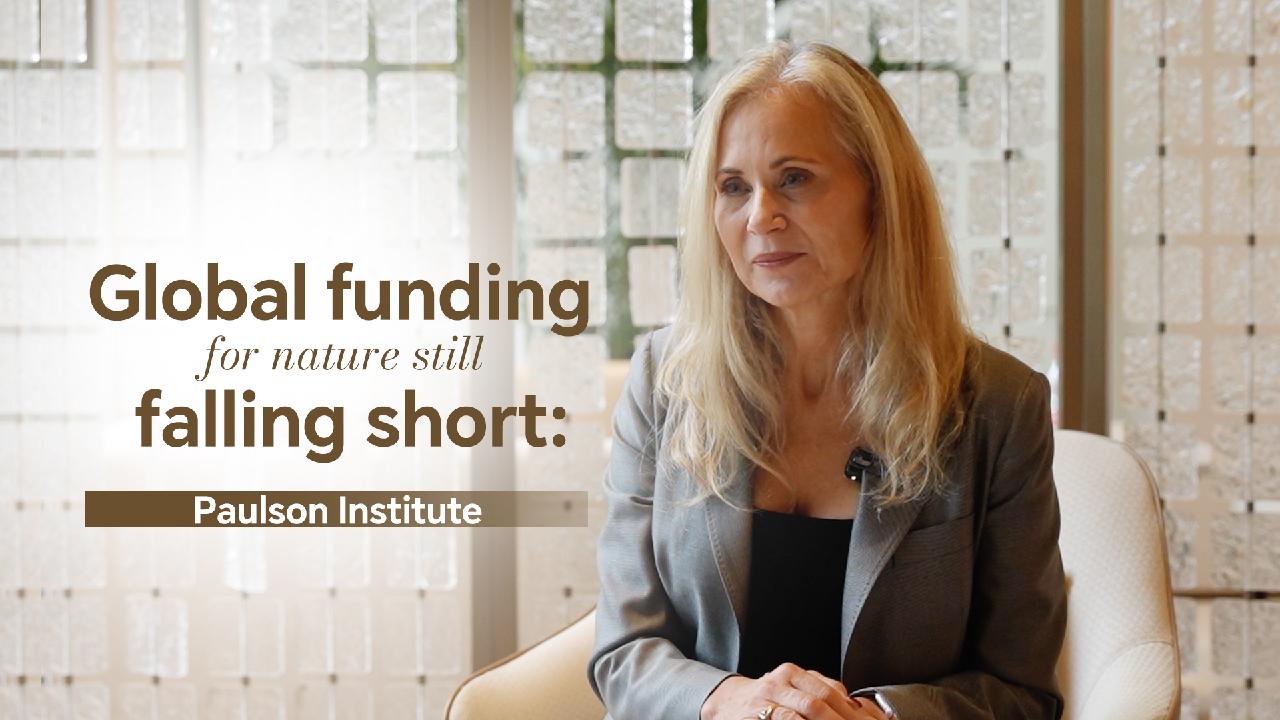
Global funding for nature still falling short: Paulson Institute
Global funding for nature still falling short: Paulson Institute

Budget to include £1bn for social and affordable housing
The move will take funding for the 10-year programme to more than £40bn.
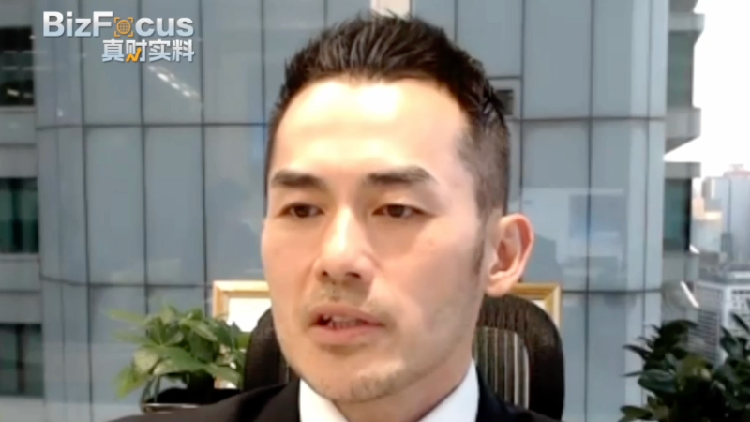
Schroders: China's capital market opening deepens two-way connectivity
China's capital market opening-up is a very positive long-term development that deepens two-way connectivity between China and international capital markets, said Yu Xueyu, CEO of Schroders Hong Kong, in an interview with CGTN.

My Co-Worker Is Losing It Over My Religion
Plus: Reader responses to a woman returning to the office after two decades of self-employment.

The Long Life of the ‘Snacking Occasion’
As eating habits shift, the food industry is promoting any opportunity to nibble.

China's industrial growth gains momentum
China's industrial growth gains momentum. Strong growth in AI-related manufacturing, emerging industries and equipment investment highlights the country's new development drivers.
Expert: China's AI infra sector offers investment opportunities
As China advances the development of new quality productive forces during the 15th Five-Year Plan period (2026–2030), Tan Poh Hwee, president of the Asia Academy of Digital Economics, told CGTN that China has already built strong momentum in these fields.

Rosebank: Life on the oil field at the centre of a political storm
Scotland editor James Cook finds out what life is like on board a ship in an untapped oil field awaiting its fate.

Heating oil costs 'more than double' ahead of winter
Middleton in Teesdale has no mains gas supply so many residents use expensive heating oil.

UAE's Ras Al Khaimah signs friendship agreement with Fujian Province
One of the key outcomes of Ras Al Khaimah Ruler H.H. Sheikh Saud bin Saqr Al Qasimi's visit to China is a paper to formalize the sisterhood agreement between Ras Al Khaimah and Fujian Province.
YOUR NEWS, OUR NETWORK.
Do you have Great News you want to tell the world?
Be it updates about your business or your community, you can make sure that it’s heard by submitting your story to our network reaching hundreds of news sites across 6 verticals.