
Furniture Built for Singapore Homes: Megafurniture Brings Design and Manufacturing In-House Across Two New Factories
Jun 25, 2026
By owning production in Batu Pahat and Foshan, the Singapore retailer can engineer sofas, beds and mattresses around HDB, condominium and landed dimensions — a vertical-integration bet that runs against the asset-light retail trend
Singapore, June 25, 2026 -- Megafurniture.sg, a Singapore furniture retailer, now designs and manufactures its products in its own factories — a change the company says lets it build pieces around the way Singaporeans actually live, rather than adapting generic designs ordered from third-party suppliers.
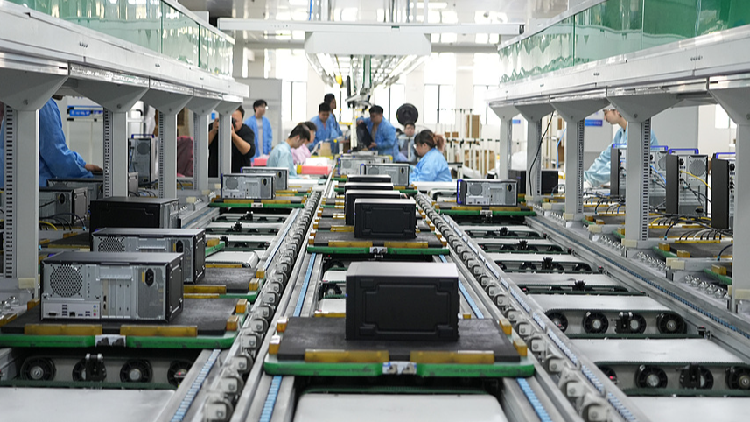
The company operates two facilities, one in Batu Pahat (Johor, Malaysia) and one in Foshan (Guangdong, China), both running since the fourth quarter of 2025. Production is ramping in stages over three years, through 2028. The move places Megafurniture among the few furniture retailers in Singapore that manufacture in-house rather than ordering finished goods from original-equipment (OEM) suppliers.
A bet that runs against the retail grain
The decision cuts against the prevailing retail playbook, which generally favours light balance sheets and outsourced production. Megafurniture has moved the other way, putting capital into owning the line itself. Its reasoning is control. When a company owns the factory, it sets quality from the raw material onward, instead of inspecting a supplier's output after it has already been made and shipped.
"Owning the factories lets us control quality at every stage, from the materials we select to the product that reaches a customer's home," said Teck Oon, a spokesperson for Megafurniture. "Outsourcing is simpler. It also hands the part that matters most to someone else."
That control is meant to compound over time. The staged ramp through 2028 is intended to bring a growing share of the company's catalogue into its own factories, rather than switching everything across at once. For a retailer, the appeal of vertical integration is consistency and accountability: the same business that designs a piece also builds it, so a flaw on a finished sofa is the manufacturer's to answer for, not a distant supplier's.

Designing for the room, not the catalogue
The more immediate change, the company argues, is in design. Space in Singapore homes is measured carefully, and furniture sized for a generic catalogue often sits awkwardly in an HDB flat or a compact condominium bedroom. Controlling production lets Megafurniture start from the room instead of the warehouse.
In practice, that means a three-seater can be proportioned for a four-room flat, a storage bed can be configured for a bedroom with little floor to spare, and a wardrobe can be built to the height and depth of a condominium room rather than trimmed to fit after it is delivered. For households furnishing a new flat or working through a renovation, the difference is whether a piece is designed for the space or merely squeezed into it.
"When you build the furniture yourself, you start from the room instead of the catalogue," Teck Oon said. "A three-seater that fits a four-room flat, a storage bed that works in an HDB bedroom — those decisions happen at the factory, not after the piece arrives."
A range built for a Singapore home
The in-house range covers the categories that fill a typical Singapore home. Its sofas come in two-seater, three-seater, sectional and sofa-bed configurations, upholstered in fabric, leather, faux leather, velvet and boucle, so a living room can be matched to both its dimensions and its material preferences. Its bed frames span platform, divan and storage designs, the last aimed squarely at bedrooms where under-bed space has to work harder.
Its mattresses, sold under the company's own Somnuz brand, are produced in pocket-spring, latex, memory-foam and hybrid constructions. Owning the mattress brand and the factory that makes it allows the company to manage the specification of a product that buyers cannot easily inspect for themselves. Beyond the bedroom and living room, the factories also produce wood furniture, including wardrobes, cabinets, sideboards, TV consoles, bookshelves and dining tables — the pieces that tend to be bought together when a home is set up.
Producing across categories under one roof also lets the pieces in a home relate to one another. A buyer furnishing a flat from several importers usually ends up with items that were never designed to sit together: a sofa from one source, a bed from another, storage from a third, each built to its own proportions and finished in its own way. When a single company designs the sofa, the bed frame, the storage and the dining table, those proportions, materials and finishes can be kept consistent from one room to the next. They can also be matched again on a later purchase, when a household adds a piece or furnishes another room, rather than hoping a previous range is still in stock.
Two factories, one design brief
The two-country footprint gives Megafurniture production bases in both Malaysia and China, two of the regions that supply much of Southeast Asia's furniture. Rather than coordinating between separate external manufacturers in each location, the company now runs both sites itself, designing centrally for the Singapore market and producing across the two facilities.
Designing centrally for a single market also shapes what actually gets built. Instead of selecting from whatever a roster of external suppliers happens to offer in a given season, the company can decide which sizes, configurations and finishes to put into production for Singapore homes specifically, and revise that mix as the staged ramp through 2028 brings more of the catalogue in-house. Over time, the company says, that should mean fewer compromises between what a buyer is looking for and what a supplier happened to make.
Owning manufacturing also lengthens the part of the chain the company controls. Because the same business designs, builds, delivers and assembles a piece, responsibility for the finished product does not change hands at a factory gate. Professional delivery and assembly are included on qualifying orders, extending that single line of accountability into the customer's home.
Seeing the range in person
Customers can view the range at Megafurniture's furniture showrooms. The flagship, at 134 Joo Seng Road, occupies roughly 30,000 square feet across two levels; a second showroom operates at 21 Tampines North Drive 2, at Giant Tampines. The company also sells online and delivers across Singapore.
The shift to in-house design and manufacturing began in earnest in 2026, the first full year both factories have run under Megafurniture's ownership. As the three-year ramp continues, the company expects an increasing portion of what it sells to be designed and built by the same team — and, it argues, designed for the homes those products are meant to go into.
About Megafurniture — Megafurniture designs, sells and manufactures furniture for HDB, condominium and landed homes across Singapore, through its online store and two physical showrooms. The company owns the Somnuz mattress brand and operates its own factories in Malaysia and China for in-house design, manufacturing and quality control. Professional delivery and assembly are included on qualifying orders.
Contact Info:
Name: Mega Furniture Singapore
Email: Send Email
Organization: MEGA FURNITURE PTE. LTD.
Address: 21 Tampines North Dr 2, #03-01 Giant Tampines, Singapore 528765
Phone: 6950 2657
Website: http://megafurniture.sg
Video URL: https://www.youtube.com/@megafurniture_sg
Release ID: 89196116
If there are any deficiencies, discrepancies, or concerns regarding the information presented in this press release, we kindly request that you promptly inform us by contacting [email protected] (it is important to note that this email is the authorized channel for such matters, sending multiple emails to multiple addresses does not necessarily help expedite your request). Our dedicated team is committed to addressing any identified issues within 8 hours to guarantee the delivery of accurate and reliable content to our esteemed readers.
More News

Spanish firm set to buy Harland and Wolff
Spain’s state-owned shipbuilder Navantia is in exclusive talks to buy the Belfast-based shipyard.

Cyber wars and global collaboration: Huawei executive on cybersecurity
"Cybersecurity is no longer a weapon of mass disruption but of mass destruction, because it can kill lives," said Aloysius Cheang, Huawei's president of Cybersecurity & Privacy Protection and chief security officer for the Middle East and Central Asia, stressing the increasingly dangerous nature of cyberattacks.

China's economy shows stable overall performance
China's economy has continued to improve and made steady progress in high-quality development, amidst a complex and ever-evolving international landscape.

China's yuan loans grow by 16.02 trillion yuan in first 3 quarters
China's yuan-denominated loans rose by 16.02 trillion yuan (about $2.27 trillion) in the first three quarters of the year. The M2, a broad measure of money supply that covers cash in circulation and all deposits, climbed 6.8 percent year on year to 309.48 trillion yuan at the end of September.

China to enhance catalytic role of government investment
On September 26, the Political Bureau of the Central Committee of the Communist Party of China convened a meeting to analyze the current economic situation and outline the next steps for economic work. This meeting not only signaled a shift in China's macroeconomic policy but also showed the country's confidence in achieving its annual economic and social development goals, rallying the entire society to drive sustained economic recovery and improvement.
Ensuring rule-based high-quality development of the private sector
A draft law on China's private sector promotion was released to solicit public opinions last week, marking a significant milestone in the construction of a law-based business environment in China.

How Kamala Harris’s Economic Plan Has Been Shaped by Business Leaders
The vice president has repeatedly incorporated suggestions from business executives into her economic agenda.

China’s Stock Markets Rebound on Promises to Help Businesses
Assurances from government officials on plans to strengthen the private sector offset a lack of specifics about economic stimulus.

China reports 5.3% growth in foreign trade over first three quarters
China's foreign trade surged robustly in the first three quarters of 2024, surpassing the 32 trillion yuan ($4.44 trillion) mark for the first time during this period.

‘I lost £165k to fraud in an hour’ - customers say they were let down by Revolut
Revolut was named in more complaints about fraud last year than any of the UK’s biggest banks or e-money services.

TSMC 3rd-quarter profit to jump by 40% amid rising chip demand
TSMC 3rd-quarter profit to jump by 40% amid rising chip demand

John F. Kennedy Jr.’s 1990s-Era Magazine Is Back, With a QAnon Twist
It is a reanimation story strange enough for a zombie movie, made possible by the fact that the original George trademark lapsed, only to be secured by a conservative lawyer.

Evan Gershkovich, U.S. Journalist Imprisoned in Russia, Will Publish a Memoir
The memoir, which will cover his time in prison and Russia’s move toward autocracy, will be published by Crown, an imprint of Penguin Random House.

Dreaming of diamonds: Generations dig for fortune in India's gem town
In Panna, families hunt for diamonds hoping to strike rich and escape the cycle of poverty.

Thousands of cars that crash in US are ending up in Russia
The South Caucasus nation of Georgia has a huge used car market, with many vehicles finding their way over the border.

The Secretive Dynasty That Controls the Boar’s Head Brand
The deli-meat company made its owners fabulously wealthy. But they have remained silent, even as the company faces the biggest scandal in its history.

Watch: Why is the latest SpaceX rocket test a big deal?
The BBC's Pallab Ghosh explores why this world first test is a big deal for space exploration.

Fisher-Price Recalls ‘Snuga Swings’ Linked to Five Infant Deaths
The U.S. Consumer Product Safety Commission announced the recall, which one of its commissioners said was “doomed to fail.”

How Roger Goodell Made the NFL the World’s Wealthiest Sports League
Under the expansionist leadership of its commissioner, the National Football League is growing richer and richer. So, too, is Mr. Goodell.

Pakistan hosting SCO meeting is a turning point for regional diplomacy
Pakistan hosting SCO meeting is a turning point for regional diplomacy

Executives and Research Disagree About Hybrid Work. Why?
Companies like Amazon have required a return to the office five days a week despite findings showing benefits to employers that allow some remote days.

Mortgage costs 'unlikely' to return to low levels
The boss of the UK's biggest lender says mortgage costs are unlikely to fall to levels seen in the past decade.

Budget rule change could mean more money to build hospitals
Here is how the chancellor could choose to tweak the government's borrowing rules to free up more cash.

Port plan to go ahead after row over minister's comments
A £1bn investment will take place, despite a row with the owner of P&O Ferries, says the business secretary.

Why Millennials Prioritize Spending Money to Improve Their Lives
Placing a high value on personal growth, millennials and Gen Z appear more likely than older generations to make hobbies and nonessential purchases a spending priority.

Work Advice: How Can I Get My Male Boss to Notice Me?
When there are men in the room, a female colleague is made to feel invisible.

Filmed in New York, Hold the Taxis and Radiators
When independent movies like “Rosemead” travel to a state for tax incentives, they save money but add creative challenges.

China's consumer prices rose moderately in September
China's consumer prices rose moderately in September. Experts say that market demand is set to rise following the introduction of powerful new policies aimed at stimulating the economy.

California Rejects Bid for More Frequent SpaceX Launches
A commission denied a request to increase the number of rocket launches on the state’s central coast, citing environmental concerns.

Fitch Ratings Issues Warning About France’s Finances
A rating agency’s warning about the country’s ballooning debt comes as the prime minister tries to push an austerity budget through a divided Parliament.

Led by Believers in the City’s Future, Detroit Is on the Rebound
Once the largest city in the U.S. to declare bankruptcy, this Midwestern metropolis is now thriving. But some obstacles still remain.

China stimulus policy blueprint shows passion, patience & perseverance
China's economic policy shift can be viewed through three keywords: passion, patience and perseverance.

P&O owner to attend summit despite row over minister's comments
It had been feared they might pull out after Transport Secretary Louise Haigh criticised the ferry firm and urged consumers to boycott the company.
YOUR NEWS, OUR NETWORK.
Do you have Great News you want to tell the world?
Be it updates about your business or your community, you can make sure that it’s heard by submitting your story to our network reaching hundreds of news sites across 6 verticals.